When you first start building a business, you expect the long hours. What you don’t expect is how quickly daily paperwork can take over your life, leaving you bouncing between compliance rules, team logistics, and simply keeping the lights on. Relying on messy processes or outdated tools creates a fragile setup that cracks the moment things get busy. Precious hours are lost chasing paper when you should be making money, leading to disorganised teams, payroll mistakes, and budgets running completely out of control.
Fixing these tools later is a nightmare that completely stalls your momentum. The secret is to get it right from the start. Building a clean, connected software setup early means things run smoothly from day one, saving you from a massive headache down the track when you’re busy managing a growing team. So, what do you actually need? Here are the four must-haves.
1. Getting daily operations organised
No matter where you are on your business journey, you need a secure, professional home base to run things every day. A solid workspace is the absolute baseline for keeping your documents, client emails, and files in order. Standard options like Google Workspace or Microsoft 365 give you the immediate tools to manage professional emails, coordinate calendars, and store files safely before the paperwork mountain becomes overwhelming.
As your business grows, the workspace transforms into your central knowledge bank. Keeping your administrative files, company rules, and daily checklists in a shared drive means you aren’t scrambling to track down critical files later. It makes it incredibly simple to securely share training guides and notes the moment you begin expanding your team.
2. Keeping on top of your business finances
Running a business requires a clear, real-time view of your money coming in and money going out. Cloud accounting platforms act as your single source of truth long before things get complicated. Using trusted options like Xero or MYOB simplifies the daily grind of tracking sales and managing invoices, keeping your cash flow healthy, and helping you maintain compliance with the ATO from the very beginning.
The real power of establishing this foundation early is that it positions you to handle future growth without the stress. Rather than sorting through receipts and spreadsheets at the last minute when tax time rolls around, having an automated ledger in one place ensures your records are clean and up to date. Locking in this financial core early builds a reliable structure that connects seamlessly with your daily work whenever you choose to expand.
3. Speeding up routine tasks and reducing admin with AI
Artificial intelligence is an incredible time-saver for small teams buried under paperwork and manual processes. Rather than a replacement for your staff, AI works best as an on-demand teammate to clear away tedious, routine tasks. According to Deputy’s 2026 Big Shift Report, technology is already delivering massive wins, with nearly 75% of shift workers saying AI tools help them finish tasks and leave work on time. You can use platforms like OpenAI’s ChatGPT or Google Gemini to instantly map out checklists, such as step-by-step sick leave procedures, opening and closing guides, or new-hire onboarding steps. It can also draft customer service replies, or outline basic business reports.
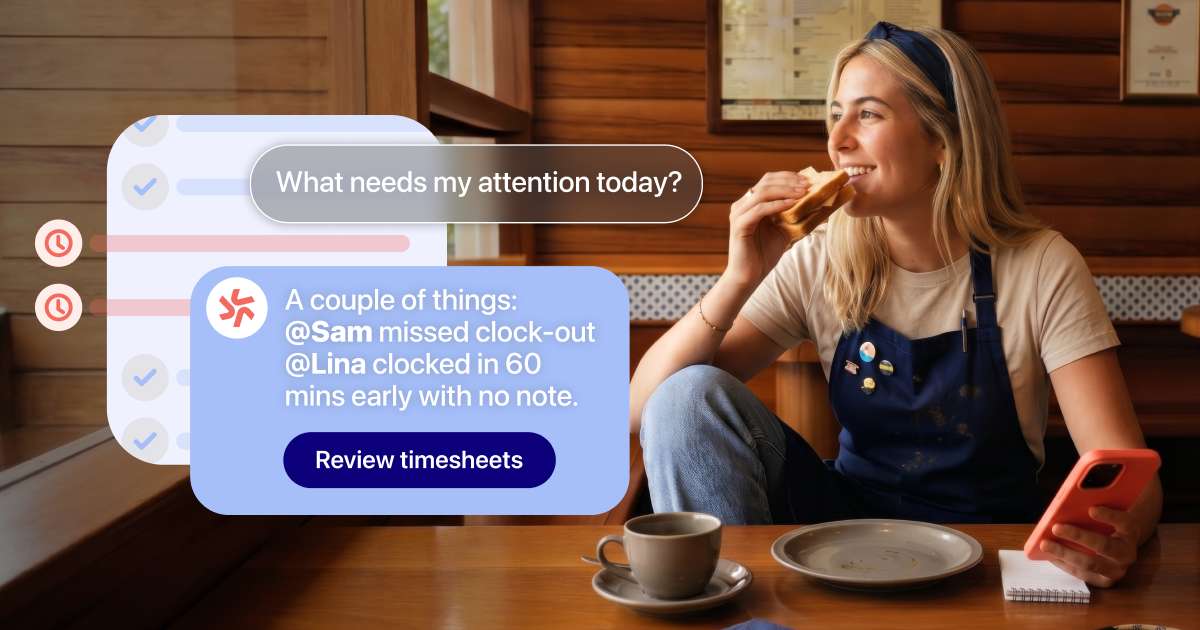
This daily efficiency is exactly why modern workforce tools are building AI directly into your everyday work. With Deputy’s native AI capabilities, you can manage schedules and timesheets fast using a conversational AI agent right from your phone. Instead of reviewing every single row manually, you can literally ask the AI, “What needs my attention today?” The conversational AI agent instantly flags specific issues, such as Sam missing a clock-out or Lina clocking in 60 minutes early without a note, and lets you review timesheets, bulk-approve matching rows, or chase up unapproved ones with a single tap.
4. Scaling your business with an all-in-one team platform
When you go from a solo founder to an employer, managing casual staff by hand becomes a massive compliance risk. If you run multiple locations or entities, relying on basic accounting software for payroll usually leaves you stuck paying for separate apps that do not talk to each other. By running your day-to-day through a platform like Deputy, you can manage everything from one simple dashboard. Once your paperless HR onboarding, pay rates, and award interpretations are set up, you can plug in Deputy Payroll to run everything under one roof.
This completely changes the game for both your team and your financial partners. Using Deputy for payroll takes the manual data entry completely off your bookkeeper’s desk, meaning they can stop chasing paper timesheets and start giving you real advice on how to grow instead. At the same time, it removes messy WhatsApp and text chains for your staff. Moving to a single platform brings your team communications into a secure feed where your crew can review rosters, swap shifts, and receive critical updates all in the same app where they clock in.
For hospitality and retail businesses, linking this setup to your Point of Sale (POS) system is another massive win. With the intense cost pressures businesses are facing right now, keeping a tight grip on your numbers is non-negotiable. Connecting your POS directly to your rostering tool means your real-time sales data flows straight into your schedule. This lets you compare your actual sales against your rostered hours on the fly, giving you the visibility you need to control labour costs and avoid overstaffing during quiet periods actively.
Starting simple and grow from there
Your software shouldn’t cause a headache; it is supposed to give you your time back. If you feel like you are buried under manual paperwork, catching up does not require a weeks-long transition or expensive onboarding packages. Tools like Deputy let you set up your account and go live in a single day.
Best of all, a smart setup scales as you grow. Look at a global brand like F45. In their early days, individual studios texted photos of spreadsheet rosters over messy chat groups, leading to constant trainer no-shows. Deputy fixed their immediate rostering hurdles, and naturally scaled with them as they multiplied across the globe.
Without the ability for apps to talk to each other, you end up trapped in a cycle of constantly changing software because there’s no way for them to connect as your business needs shift. Getting your software foundations sorted today means you can focus entirely on the future instead of constantly fixing broken processes.
Want to see how it works in practice? Register for a free live session to get a step-by-step walk-through of a typical business week with Deputy. Or, start your free trial today and set up exactly what your business needs right now, with the flexibility to unlock AI, communication, HR, and payroll as your team and operations evolve.