Part-Time vs Full-Time Retail Employees in Australia | Deputy

by Deputy Team, 11 minutes read
HOME blogdifferences between part time and full time retail employees

Key takeaways

  • Under the Fair Work Act, full-time retail employees work 38 hours per week with full leave entitlements, while part-time employees work fewer regular hours with pro-rata benefits.

  • The General Retail Industry Award requires a written agreement specifying exact days, hours, and start/finish times for every part-time employee.

  • Casual employees receive 25% casual loading but miss out on paid leave — choosing the right employment mix affects your labour costs and team stability.

  • Getting your workforce mix right starts with understanding demand patterns and rostering accordingly.

If you run a retail store in Australia, you've almost certainly asked yourself: should I hire more full-time staff, part-time staff, or casuals? The answer depends on your trading patterns, your labour budget, and how much flexibility you need week to week.

With the average retail hourly wage rising from $27.40 (Deputy's Big Shift Report 2025) to $32.50 (Deputy's Big Shift Report 2026) — getting your workforce mix right has never been more important. This guide walks you through the legal definitions, leave entitlements, superannuation obligations, and real-world costs so you can make confident staffing decisions.

Australian retail store manager reviewing a roster on a tablet while standing on the shop floor

How Australian law defines full-time and part-time retail employees

Before you start hiring, you need to understand how the Fair Work Act and the National Employment Standards (NES) classify different employment types. These definitions aren't optional — they determine your obligations around pay, leave, and termination.

Full-time retail employees under the Fair Work Act

A full-time employee works 38 ordinary hours per week on a permanent, ongoing basis. Under the General Retail Industry Award, full-time retail workers receive the complete suite of NES entitlements, including:

  • Four weeks of paid annual leave per year

  • 10 days of paid personal/carer's leave per year

  • Paid public holidays

  • Redundancy pay and notice of termination

  • Parental leave (unpaid, with a right to return)

Full-time employees typically work a set roster with predictable hours. That predictability makes labour budgeting straightforward — you know exactly what you're paying each week.

Part-time retail employees and the written agreement requirement

A part-time employee works fewer than 38 ordinary hours per week on a regular, agreed pattern. They receive the same leave entitlements as full-time employees, calculated on a pro-rata basis.

The General Retail Industry Award requires you to create a written agreement with every part-time employee before they start — a step many retail managers overlook. That agreement must specify:

  • The exact days of the week they'll work

  • Their start and finish times on each day

  • The total number of hours per week

Any work outside that agreed pattern triggers overtime rates. You'll find more detail on this in the rostering section below — it's one of the most common and costly mistakes retail managers make.

According to Deputy's 2025 Better Together Survey, only nine per cent of part-time employees are fully aware of their workplace rights, compared with 20 per cent of full-time workers. That gap puts the responsibility squarely on you to get the paperwork right and communicate clearly.

Where does casual employment fit in?

In Australian retail, the workforce question goes beyond full-time versus part-time. Casual employment is the third piece of the mix — and understanding its costs and obligations matters just as much.

What casual loading means for your retail wage bill

Casual loading is an additional 25% on top of the base hourly rate, paid in lieu of leave entitlements. It compensates casual workers for missing out on paid annual leave, personal leave, and other NES benefits.

Here's a simplified example under the General Retail Industry Award:

  • Part-time Level 1 base rate: approximately $24.95 per hour

  • Casual Level 1 rate (base plus 25% loading): approximately $31.19 per hour

That difference adds up fast, especially over weekends and public holidays when penalty rates apply on top of the loading. You'll want to weigh that higher hourly cost against the savings from not accruing leave liabilities.

The casual conversion pathway explained

Since the August 2024 changes to the National Employment Standards, casual employees now have a clearer pathway to permanent employment. If a casual employee has worked for you for 12 months and their hours have been regular and systematic during at least the last six months, they can request conversion to part-time or full-time status.

As a retail employer, you can only refuse the request on reasonable business grounds — and you need to put that refusal in writing. Deputy helps you monitor casual employee tenure so you can identify when the 12-month casual conversion pathway applies, rather than being caught off guard by a conversion request.

Comparing employment types at a glance

Comparing leave entitlements for retail staff

Leave is one of the biggest practical differences between employment types, and it directly affects your labour costs and roster planning. Here's what you owe each group under the NES and the General Retail Industry Award.

What full-time and part-time retail workers receive

Both full-time and part-time employees are entitled to:

  • Annual leave — four weeks per year (calculated pro-rata for part-time staff based on their ordinary hours)

  • Personal/carer's leave — 10 days per year (pro-rata for part-time staff)

  • Compassionate leave — two days per occasion

  • Long service leave — varies by state and territory, but generally accrues after seven to 10 years

  • Parental leave — up to 12 months unpaid (with a right to request an additional 12 months)

The key word is pro-rata. If a part-time employee works 20 hours per week, they accrue half the annual leave of a full-time employee. That leave still accumulates on your books as a liability, so you'll want to encourage your team to take their leave regularly.

What casual retail employees receive

Casuals receive far fewer leave entitlements:

  • Two days of unpaid carer's leave per occasion

  • Two days of unpaid compassionate leave per occasion

  • Unpaid community service leave

They don't receive paid annual leave, personal leave, or paid public holidays (though they do receive penalty rates for working on public holidays). The 25% casual loading is designed to offset these gaps — but it's worth remembering that it doesn't help your casual staff when they actually get sick or need time off.

How pay and superannuation differ

Pay rates in Australian retail are set by the General Retail Industry Award, not by individual negotiation alone. Understanding how award rates, penalty rates, and superannuation work across employment types will help you budget accurately.

Award rates and penalty rates in retail

The General Retail Industry Award sets minimum pay rates for retail employees at each classification level. On top of the base rate, you'll pay penalty rates for:

  • Saturday work

  • Sunday work (higher rate than Saturday)

  • Public holidays (highest rate)

  • Evening and early morning shifts

  • Overtime (for hours outside the agreed pattern)

According to Deputy's Big Shift Report 2026, the average retail hourly wage has risen to $32.50 — a significant jump from the $27.40 reported in Deputy's Big Shift Report 2025. That increase makes accurate rostering and labour cost management even more critical for your bottom line.

Superannuation obligations for all employment types

Here's something that catches new employers off guard: superannuation applies to all three employment types. Under the super guarantee, you must contribute the current super guarantee rate on ordinary time earnings for every eligible employee — full-time, part-time, and casual.

Your super obligations checklist:

  • Pay super at least quarterly

  • Use a compliant super fund (employees can choose their own fund)

  • Include super in your labour cost calculations for all employment types

  • Keep records of all super contributions

Deputy's time and attendance tools capture ordinary hours and overtime separately, which simplifies calculating the correct super contributions when you run payroll.

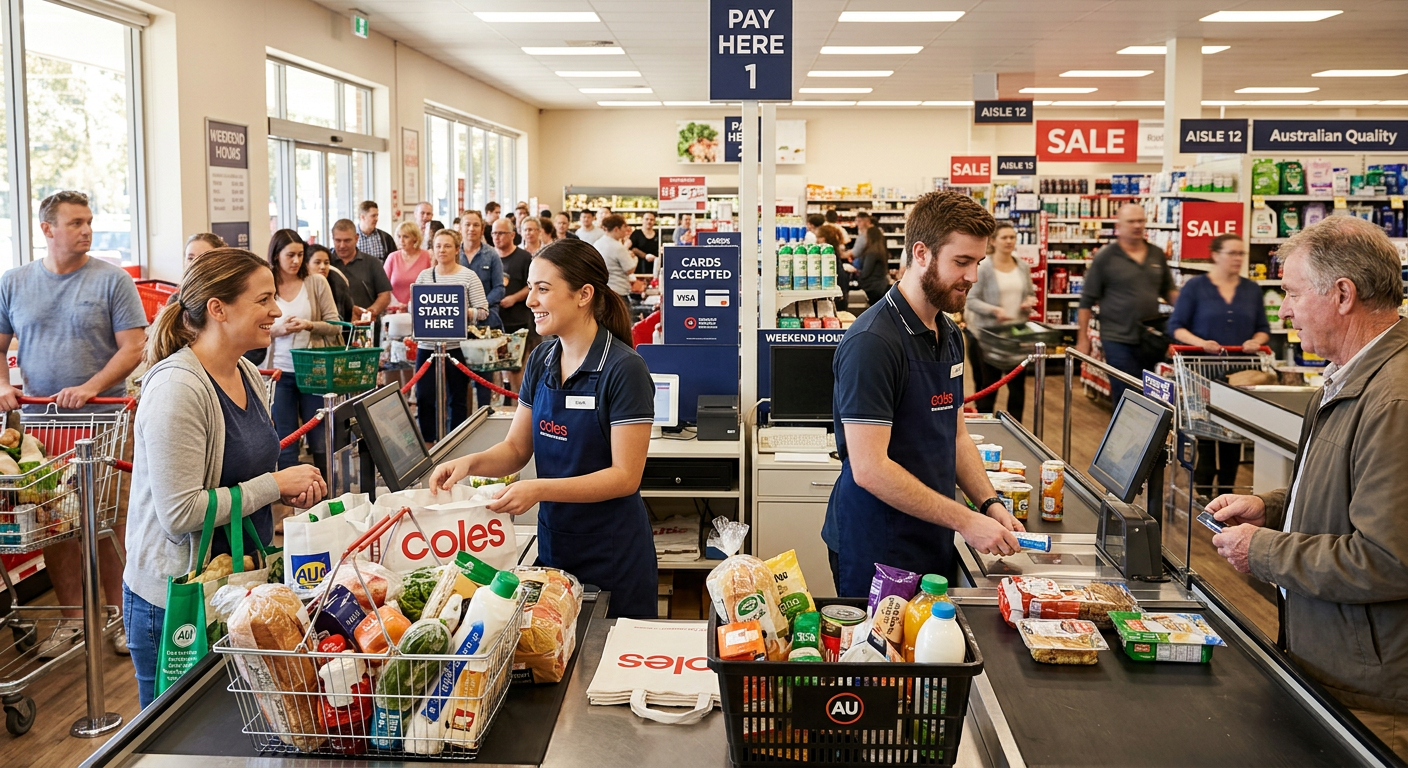
Retail team members working together at a store checkout during a busy trading period

Roster your retail team with confidence — start a free trial of Deputy.

The real cost of your retail workforce mix

Labour is one of the most significant costs for any shift-based business, according to Deputy's Labour Demand Forecasting research. With 36% of retail shift workers considering resigning (Deputy's Big Shift Report 2025), the cost equation goes beyond hourly rates — you also need to factor in recruitment, training, and the operational disruption of turnover.

When part-time employees save you money

Part-time employees can be more cost-effective than a fully casual workforce because:

  • You avoid the 25% casual loading

  • Their regular hours make labour costs predictable

  • They tend to stay longer — Deputy's Big Shift Report 2026 found that part-time workers with one employer are less likely to consider leaving (49%) than those juggling multiple employers (63%)

  • Lower turnover means less money spent on recruiting and onboarding

The trade-off is less flexibility. You're committing to a set number of hours each week, and the written agreement means you can't easily reduce those hours without the employee's consent.

When casual flexibility makes more sense

Casuals earn their place in your workforce mix when demand is genuinely unpredictable — think seasonal peaks, one-off events, or covering unexpected absences. The advantages include:

  • No obligation to provide ongoing work

  • No notice period required for ending the engagement

  • No accruing leave liabilities on your balance sheet

The higher hourly cost is worth factoring in carefully. The 25% loading pushes your hourly rate up, and high casual turnover can erode team knowledge and customer service quality. Deputy's Big Shift Report 2026 data tells a clear story: part-time workers juggling multiple employers are significantly more likely to leave (63%) than those with a single employer (49%). Building a stable part-time core with casual support for peaks often gives you the best of both worlds.

Rostering part-time and full-time retail teams

In Australian retail, your roster isn't just an operational tool — it's a compliance document. The way you roster part-time staff directly affects whether you're paying ordinary rates or overtime, and whether you're meeting your obligations under the General Retail Industry Award.

The written variation trap retail managers miss

If a part-time team member works a shift outside the days and hours in their written agreement, you may owe them overtime rates — even if they haven't exceeded 38 hours for the week and were happy to come in. The General Retail Industry Award is specific: any work outside the agreed pattern is treated as additional hours attracting overtime penalties.

To vary a part-time employee's roster compliantly, you need written agreement to the change. Deputy's rostering software records agreed work patterns digitally, creating an audit trail when variations are made. That documentation helps you navigate the Fair Work Act requirements rather than relying on memory or informal text messages.

As one part-time food service worker says in Deputy's 2025 Better Together Survey: "We turn up and find new systems in place. Nobody tells us. We just have to figure it out." Clear communication and proper documentation protect both you and your team.

How demand forecasting helps you get the mix right

The smartest way to decide between part-time and casual hires is to look at your actual demand data. Deputy's auto-scheduling feature analyses historical sales and foot traffic patterns to predict how many people you need on each shift.

Deputy customers consistently cite faster rostering as one of the platform's biggest operational benefits — time you can reinvest in training, merchandising, or simply running your store. When you can see your demand patterns clearly, you can build a roster that matches your permanent part-time core to your predictable baseline and uses casuals only for genuine peaks — avoiding the pitfalls of overstaffing and understaffing.

Retail manager conducting a team briefing with part-time and full-time staff in a store back room

Building a strong team across all employment types

Regardless of whether your team members are full-time, part-time, or casual, they all deserve to feel valued and supported. The Fair Work Act requires you to treat employees fairly, but the best retailers go further because engaged teams deliver better customer service and stick around longer.

Training — Invest in onboarding and ongoing product training for every employee, not just your full-timers. Part-time staff are often the most customer-facing members of your team, yet Deputy's Better Together Survey found they're frequently the least trained. Closing that gap pays dividends in customer experience.

Communication — Keep all your team members in the loop, especially when processes change. Deputy's communication tools let you send updates to your entire team — or specific groups — through a single platform, so nobody turns up to discover changes they weren't told about.

Recognition — Openly acknowledge great work from every team member. Recognition doesn't need to cost anything, but it goes a long way toward building loyalty and engagement — especially among part-time and casual workers who might otherwise feel disconnected from your business.

Frequently asked questions

How does Deputy help you roster a mix of part-time and full-time retail staff?

Deputy's auto-scheduling considers each employee's availability, contracted hours, and award rules when building your roster. It flags potential compliance issues — like rostering a part-time employee outside their agreed hours — before you publish the roster, saving you time and helping you avoid unintended overtime costs.

Can Deputy track different pay rates for part-time, full-time, and casual retail employees?

Yes. Deputy integrates with popular payroll systems and applies the correct award rates, penalty rates, and casual loading automatically based on each employee's employment type and the hours they've worked. This reduces manual calculation errors and supports accurate pay runs.

What is the minimum shift length for part-time retail employees in Australia?

Under the General Retail Industry Award, the minimum engagement for a part-time retail employee is three hours per shift. You can't roster a part-time team member for less than three hours, even during quiet periods. Deputy's rostering tools apply the three-hour minimum when you're building your roster, flagging any shifts that fall below that threshold before you publish.

How can Deputy help you stay on top of the written agreement requirement for part-time staff?

Deputy's rostering tools record each part-time employee's agreed work pattern digitally. When you need to vary those hours, the platform creates an audit trail of the change. This documentation helps you navigate the written agreement requirements under the General Retail Industry Award and keeps everything in one place rather than scattered across emails and text messages.

Does Deputy support casual-to-permanent conversion tracking?

Deputy helps you monitor how long casual employees have been working for you and whether their hours have been regular and systematic. When a casual team member approaches the 12-month mark — the point at which the casual conversion pathway under the NES kicks in — you'll have the data you need to assess conversion requests on reasonable business grounds.

How does Deputy's demand forecasting help you decide between part-time and casual hires?

Deputy analyses your historical sales data, foot traffic patterns, and seasonal trends to predict staffing demand. By overlaying that forecast against your current roster, you can see where you have predictable, recurring demand (best filled by part-time staff) and where demand spikes unpredictably (best covered by casuals). That data-driven approach helps you optimise your labour costs while keeping your store properly staffed.

Getting your retail workforce mix right isn't a one-time decision — it's an ongoing process that shifts with your business. Whether you're hiring your first part-time team member or rethinking your casual-to-permanent ratio, the key is pairing solid knowledge of the Fair Work Act with tools that help you roster, communicate, and pay your team accurately.

Start a free trial of Deputy to see how smarter rostering can help you manage your retail team with confidence, or book a demo to chat with our team about your specific needs.