Running a restaurant means watching your biggest controllable cost like a hawk, and that cost is labor. Demand has remained resilient in many hospitality segments, according to Deputy's Big Shift Report. Yet many operators are working in a low-fire, low-hire environment, holding headcount steady and managing margin pressure through tighter scheduling rather than layoffs.
Your restaurant labor cost percentage tells you whether that pressure is under control. This guide walks you through the benchmark to aim for, how to calculate the number, and practical ways to protect your margin without cutting service.
Key takeaways
Labor is usually a restaurant's biggest controllable cost, and many operators aim to keep it around 25% to 35% of sales.
True labor cost is more than wages: it includes on-costs like payroll taxes, workers' compensation, benefits, and paid time off.
Allocating salaried staff costs to the right location or cost center gives you an accurate cost per department.
Scheduling to demand and reviewing labor cost daily, not monthly, is how you protect margin.
What is a good restaurant labor cost percentage?
Labor is often the largest line on a restaurant's profit and loss, so knowing what "normal" looks like helps you spot trouble early. As an industry rule of thumb, many operators follow the 30% rule and target labor around 25% to 35% of sales. Quick-service and cafe formats tend to sit at the lower end, while full-service and fine dining usually run higher because of the extra hands on the floor and in the kitchen.
Treat those ranges as a starting point rather than a fixed target. Your ideal ratio depends on your format, your local wage rules, and your trading pattern. It also helps to watch your prime cost, which is labor plus cost of goods sold. Many operators use a prime cost target of around 60% of sales, although appropriate targets vary by concept and operating model.
The number that matters most is your own. In Deputy, entering sales revenue allows eligible customers to view labor as a percentage of sales while building schedules.
How to calculate your restaurant labor cost percentage
Your labor cost percentage is the share of your revenue that goes to staffing. The formula is simple:
(Total labor cost ÷ total sales) × 100.
Say your restaurant takes $40,000 in a week and your total labor cost for that week is $12,000. That works out to ($12,000 ÷ $40,000) × 100, or 30%. Run the same calculation each week and you build a clear picture of where you sit against your target.
What to include in total labor cost
The catch is that "total labor cost" is more than the wages on your schedule. To get an honest number, include:
Direct labor: wages for staff involved in serving customers and producing food and drink, such as chefs, baristas, and servers.
Indirect labor: wages for roles that support the operation without serving customers directly, such as cleaners or dishwashers.
On-costs: payroll taxes (employer Social Security and Medicare, together known as FICA), workers' compensation insurance, benefits, and paid time off that sit on top of the base wage.
Each on-cost can look small on its own, but they add up quickly across a full team. Leave them out and your labor cost percentage will read lower than reality.
Allocate salaried labor costs to the right cost center
Hourly wages are easy to attribute: staff clock on to an area, and the cost follows. Salaried staff are trickier, because one manager might cover the kitchen, the front of house, and two locations in a single week. To get a true cost per department, you need to split that salary across the right cost center.
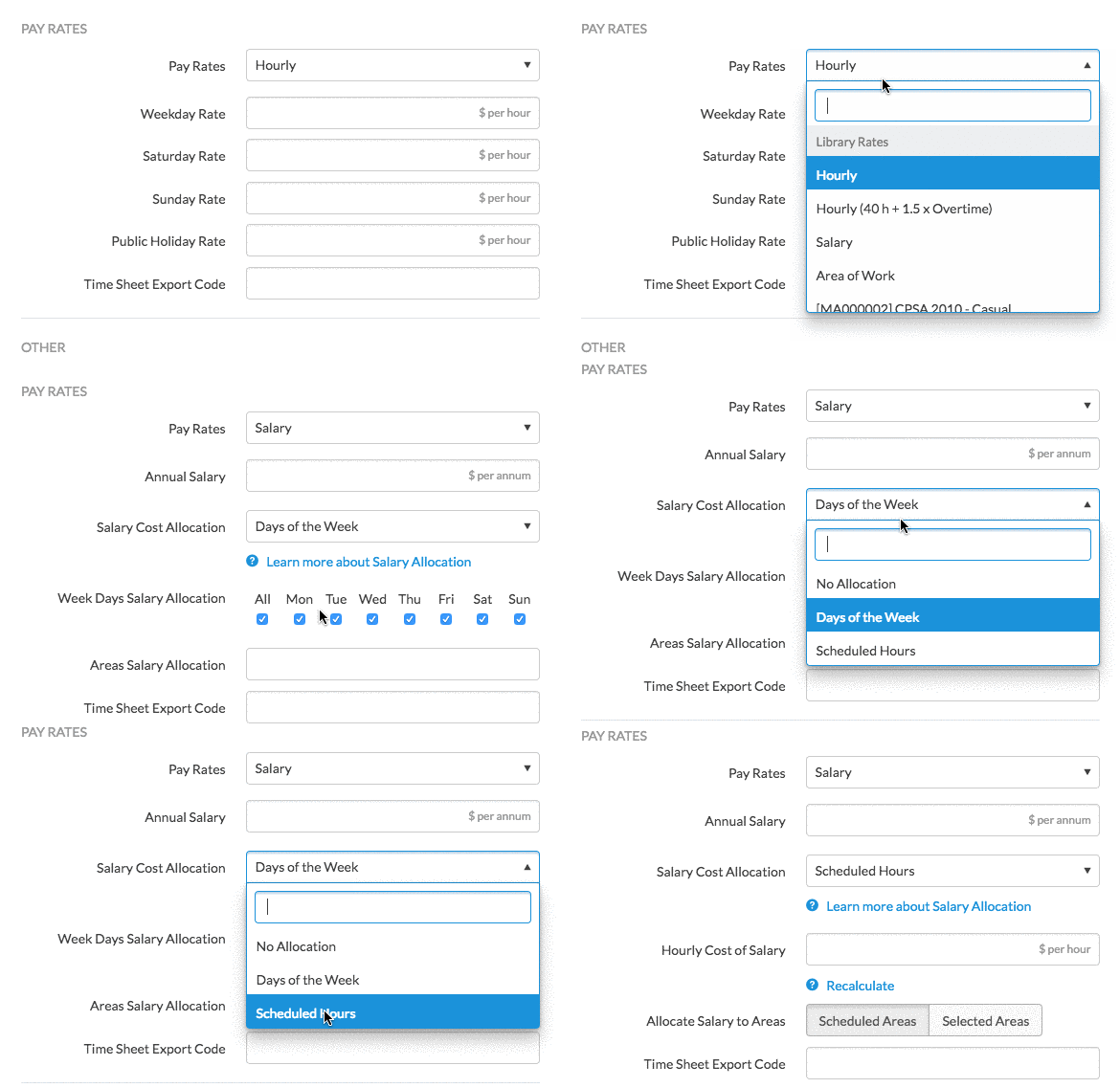
Deputy gives you three ways to allocate salaried labor costs, so you can pick the method that matches how each person actually works.
Allocate salaried costs by fixed days of the week
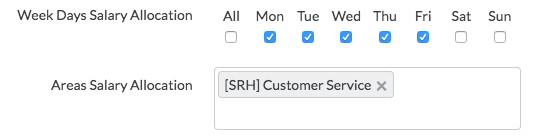
This option allocates salary costs to a particular cost center for fixed days of the week. It works best when a person's schedule barely changes week to week.
For example, Hannah manages the front of house at your downtown location and works a 40 hour week, Monday to Friday. By selecting days of the week allocation, Hannah's wage cost is portioned equally across Monday to Friday. Enter your sales revenue alongside it and you can review labor efficiency using the wages vs sales ratio.

Split salaried costs across scheduled areas
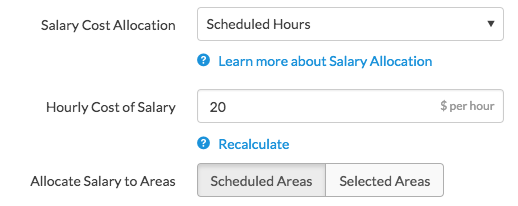
The scheduled hours to scheduled areas option distributes salary costs based on where you schedule the person, so it suits staff who move between areas. For it to work, schedule each person into the correct area.
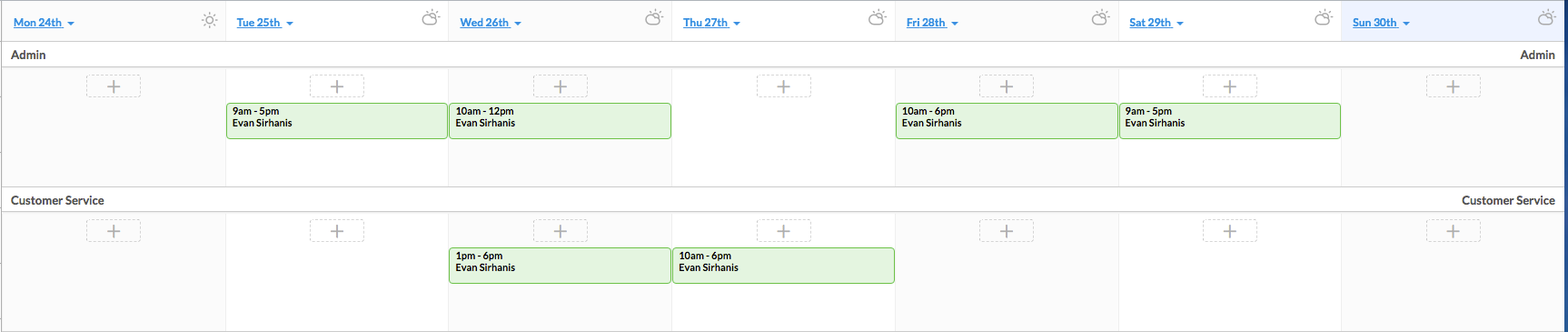
In this example, Evan is scheduled to the kitchen for 24.5 hours and to front of house for 13.5 hours. With this option on, Evan's salary cost is allocated to the kitchen and front of house cost centers for 24.5/38 hours and 13.5/38 hours respectively. That gives you a truer labor cost for each area, so you can review performance department by department.
Assign salaried costs to selected cost centers
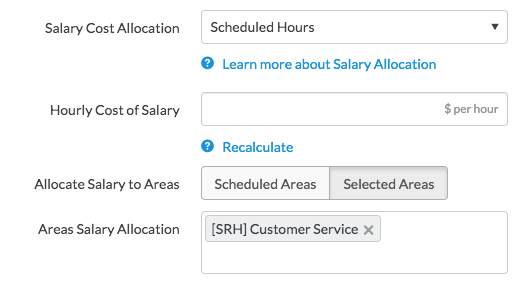
The scheduled hours to selected areas option is best when staff work across several areas but you want their cost booked to one specific cost center. Their wage cost is apportioned by scheduled hours and allocated to the cost center or centers you specify.
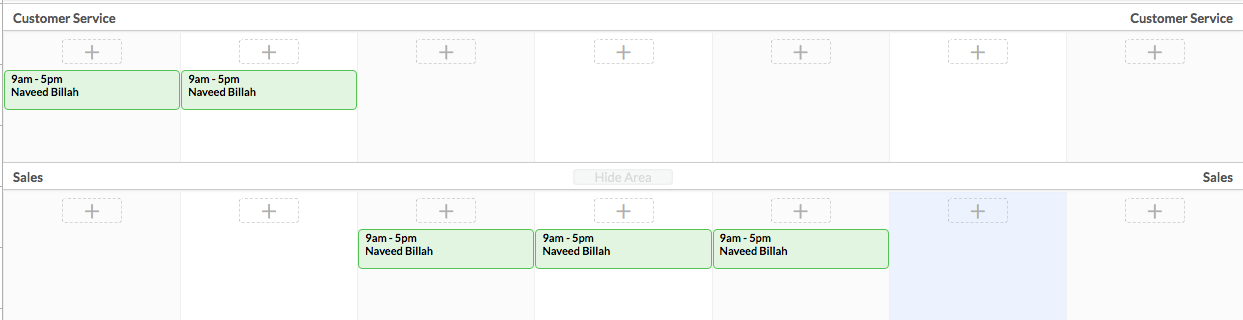
To put that in context, Naveed usually runs the kitchen but spends this week helping open a second location. Wherever he is scheduled, his salary cost stays booked to the kitchen cost center, giving you a reliable cost by department. You can then adjust the schedule with confidence, knowing your costs are accounted for. For a step-by-step walkthrough, see our salary allocation help guide.