20 Restaurant Interview Questions to Hire Great Staff

by Deputy Team, 10 minutes read
HOME blogrestaurant interview questions

Key takeaways

  • The best restaurant interview questions test whether someone stays calm, friendly, and organized when a shift gets slammed.

  • Ask different questions for front-of-house and kitchen roles, because each one rewards different strengths.

  • Mix behavioral, situational, and role-specific questions, and be mindful that questions touching protected characteristics can raise legal concerns.

  • Hiring is only half the job, so keep good people with fair schedules, fast onboarding, and clear team communication.

20 restaurant interview questions to ask (and how to read the answers)

Hiring restaurant staff is hard. You write the job post, wade through applications, then have to tell in a few minutes who can handle a real Friday night. Ask the wrong things, and you end up with a team that can't keep up.

Restaurants sit in one of the highest-turnover industries in the United States (US). The Bureau of Labor Statistics tracks quit rates for accommodation and food services that run well above the national average. That makes the right restaurant interview questions worth getting right the first time.

Restaurant manager interviewing a young job candidate at a table inside a casual restaurant

Use the sample interview questions below to gauge each candidate. For every one, you get a sample answer and what to look for, so you can read the response and not just hear it.

1. What do you know about our restaurant?

Sample answer: I've eaten here a few times and love the brunch menu. A friend on your team said the crew looks out for each other.

What to look for: A little homework shows preparation for the interview. Knowing your menu or vibe shows real interest in your restaurant.

2. Why do you want to work here versus other restaurants?

Sample answer: You're close to home, the reviews are great, and I want steady weekend shifts.

What to look for: Honest motivation is fine, even pay. A specific reason to choose you can show they've thought about the role.

3. How would you describe yourself as a leader?

Sample answer: I'm organized and I lead by example, but I'll give clear direction when a shift gets loud.

What to look for: You learn their style. Some people coach quietly, and others step up and call the plays.

4. Tell me about a time you made a decision quickly.

Sample answer: A table flagged a nut allergy after the kitchen had already fired the food. I stopped the plate, alerted the line, and had it remade.

What to look for: Restaurants move fast. You want people who act quickly, own mistakes, and protect the guest.

5. Describe a difficult customer interaction.

Sample answer: Two guests were upset about a slow drink order. I apologized, got a manager's okay, and offered a small discount.

What to look for: Watch for calm, empathy, and knowing when to pull in a manager. That is grace under pressure.

6. Tell me about a time you gave exceptional service.

Sample answer: A family waited a while with a restless toddler, so I brought crayons and a fruit cup to tide them over.

What to look for: Small, thoughtful moves keep the floor happy. This shows someone who spots problems before they grow.

7. Tell me about yourself.

Sample answer: I'm studying nearby, I like meeting people, and I worked two summers in a cafe.

What to look for: You learn their schedule, their interests, and whether hospitality fits their life right now.

8. Describe your ideal work environment.

Sample answer: A busy floor with a crew that helps each other and jumps in when someone falls behind.

What to look for: Their answer tells you if they thrive on a team or prefer working solo.

9. How would you describe yourself?

Sample answer: I'm outgoing, curious, and I like learning new things. I've always been into food and cooking.

What to look for: For guest-facing roles, look for examples of clear customer communication and comfort in busy environments.

10. What excites you about working here?

Sample answer: I get to meet new people, learn the menu, and earn steady money doing something I enjoy.

What to look for: You want people who are comfortable with guests and motivated to do good work.

11. Could you handle managing a large group of staff?

Sample answer: Yes. I've run holiday shifts before, guiding both servers and cooks while helping get orders out.

What to look for: Even for entry roles, examples of taking initiative during a busy shift are useful to hear.

12. What are your strengths and weaknesses?

Sample answer: I multitask well under pressure. I'm still building my wine knowledge, so I study the list on breaks.

What to look for: Clear strengths help you place people. Honesty about growth areas signals self-awareness.

13. What skills matter most for this role?

Sample answer: Patience and attention to detail, so orders stay right even when guests get impatient.

What to look for: Compare their answer with your own list. It shows whether they really understand the job.

14. Describe an accomplishment you're proud of.

Sample answer: I worked through community college while holding down a part-time serving job, and I graduated on time.

What to look for: Following through on a goal like that shows commitment you can ask more about.

15. Do you consider yourself a team player?

Sample answer: Always. I've bussed tables and helped plate on busy nights whenever the kitchen needed hands.

What to look for: Kitchens and floors run on collaboration. A concrete example beats a simple yes.

16. What three skills do you bring, and why do they matter?

Sample answer: I'm patient, meticulous, and a fast learner, so I keep the line moving without avoidable mistakes.

What to look for: The skills they name tell you whether they see the job the way you do.

17. If you were promoted, what role would you want?

Sample answer: I love cooking and hope to run a kitchen one day. I've got five years on the line already.

What to look for: Their answer can help you understand a candidate's development interests and where they'd like to grow.

18. You don't have restaurant experience. What skills transfer?

Sample answer: I cashiered at a grocery store for years, so I'm used to busy rushes, teamwork, and keeping customers happy.

What to look for: No restaurant experience isn't a dealbreaker. Transferable skills and a willingness to learn go far.

19. How would you describe your management style?

Sample answer: I coach more than I boss. I've trained servers for years and keep my door open for questions.

What to look for: You want leads who guide the team and steady the room when it gets loud.

20. Why did you leave your last employer?

Sample answer: I wanted more hours and a shorter commute, so I left on good terms to find a better fit.

What to look for: A calm, honest answer is a good sign. Notice how they describe a past role and whether they keep it professional.

Add these questions to your process, and you'll have an easier time assessing front-of-house and kitchen candidates for the role.
Once you've hired great restaurant staff, see how Deputy helps you onboard and schedule them so they stick around.

Situational questions that show how someone handles a busy shift

Situational questions put a candidate in a real moment and let you hear how they think. They work well for both front-of-house and kitchen roles. Try a few of these:

  • You're in the middle of a rush and the kitchen runs out of the special. What do you tell your tables?

  • A four-top's order comes out wrong on a packed Friday. What's your next move?

  • A regular is upset about a long wait. How do you turn the night around?

  • Two big parties arrive at once and you're short a server. How do you keep both happy?

Listen for a calm, guest-first answer that pulls in teammates or a manager when needed. You're testing judgment, not memorized lines.

Front-of-house roles and what to look for

Front-of-house roles are the guest-facing jobs: servers, hosts, bartenders, food runners, bussers, and the general manager. These people set the tone for the whole visit.

Because they deal with guests all night, ask questions that show how they communicate and handle guests. Are they warm and quick on their feet? Can they work on their own initiative when the floor gets busy?

Guests will ask your hospitality team about the menu, the drinks, and the specials. So look for quick learners who'll take the time to know your food and answer with confidence.

Kitchen roles and what to look for

Kitchen roles cover prep cooks, line cooks, sous chefs, pastry chefs, kitchen managers, and the executive chef. The work is preparing food, plating fast, and keeping the space clean and safe.

When you interview for the kitchen, look for people who are patient, follow directions, and learn quickly. Consistency matters more than flash, because a busy line has no room for guesswork.

Ask about how they handle a rush, how they take feedback, and how they keep their station organized. The right questions make these traits easy to spot.

How to run a great restaurant interview

The questions only work if you set up the interview well. Whether you run one location or a group of restaurants and cafes, a simple, repeatable process helps you compare people fairly.

  1. Pick three to five core questions plus one or two situational prompts, and ask every candidate the same set.

  2. Use behavioral follow-ups that ask for a real example, then dig into what they did and why.

  3. Take short notes right after each answer, so you're not relying on memory later.

  4. Score each candidate on the same traits, such as reliability, teamwork, and composure.

  5. Leave time for their questions, since good candidates are interviewing you too.

This structure keeps things fair and helps you notice patterns across a stack of interviews.

Answers worth following up on

A few answers are worth a closer look for missing or inconsistent evidence. None is an automatic no, but each is a good place to ask a follow-up question:

  • Showing up late to the interview with no heads-up or apology

  • Trash-talking past managers or blaming everyone but themselves

  • Vague, shifting answers about availability or why they left a job

  • No questions for you about the role, the team, or the schedule

  • Answers about teamwork that stay vague or give no concrete example

Interview questions that can raise legal issues

US hiring law generally restricts interview questions that touch protected characteristics. Under US law, these questions can create legal risk, so employers should review current Equal Employment Opportunity Commission (EEOC) guidance and their own counsel's advice.

Commonly protected characteristics include age, race, color, religion, sex, national origin, and disability. Federal, state, or local law can protect other characteristics, so the rules differ by location and change over time.

A safer general approach is to keep questions job-related. Common job-related screening questions often cover availability, physical job tasks, and work authorization, but employers should confirm current legal requirements. The US Equal Employment Opportunity Commission publishes current guidance.

Employers who hire younger workers may face additional federal and state rules on working hours and tasks. The Department of Labor's child labor rules for restaurants set out the federal requirements. When reviewing interview questions, many employers focus on availability and job tasks rather than personal details, and should confirm the latest guidance.

Keep the staff you hire

Asking the right questions is only half the battle. The other half is keeping the good people you worked so hard to find, because rehiring in a high-turnover industry eats your time and money.

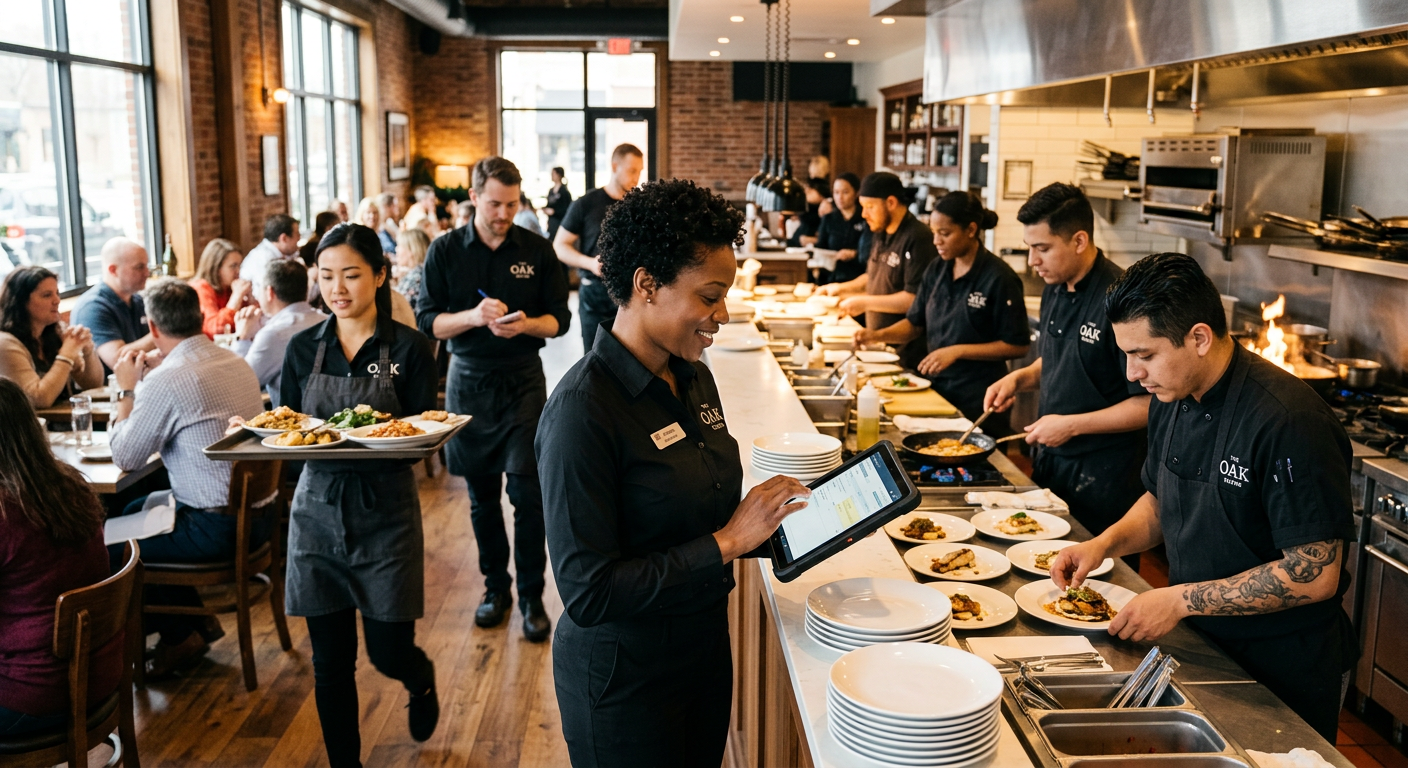
Restaurant servers and kitchen staff working together during a busy service while a manager checks the schedule on a tablet

The floor also looks different than it used to. According to Deputy's US Big Shift Report 2026, Generation Z (Gen Z) now makes up 84.8% of US hospitality shift workers. The same report says younger workers increasingly take shorter, more flexible shifts around study or a second job.

Cafe group Partners Coffee, for example, says better scheduling may help it hold on to more of its baristas.

That's where the work after the hire matters. Fast onboarding, fair scheduling that respects availability, and clear team communication can support the new-starter experience. For example, some teams use Deputy to keep onboarding, scheduling, and team communication in one place.

One customer described how better scheduling affected their team:

By managing our labor costs and scheduling better, we've been able to retain more staff. Baristas are getting the schedules they needed, and I'm able to provide the business what it needs as well.

says Gonzalo Aurelios-Solis, Cafe Manager at Partners Coffee.

If you want one place to manage onboarding, scheduling, and team communication, Deputy can support that process. A free trial and a chat with the team are available if you'd like to explore it.

Getting the most out of your restaurant hiring

Treat hiring as one connected process: sharp interview questions to pick the right people, then the right tools to support them. Doing both can simplify post-hire workforce administration.

Frequently asked questions about restaurant interviews

What are the most common restaurant interview questions?

The most common restaurant interview questions cover motivation, teamwork, handling a busy shift, and difficult guests. Start with the 20 above, then add role-specific and situational prompts. Once you hire, Deputy can help new starters get up to speed with onboarding and scheduling in one place.

What should I look for in a restaurant candidate's answers?

Look for composure under pressure, honesty about mistakes, and real examples of teamwork. Specific stories beat rehearsed lines every time. After the hire, Deputy's shift and attendance records can give managers information to review when managing attendance and scheduling.

What interview questions can raise legal issues?

Questions that touch protected characteristics can raise legal issues, so check current EEOC guidance and your own legal counsel before interviewing. Commonly protected characteristics include age, race, color, religion, sex, national origin, and disability, and other protections vary by federal, state, and local law. A common best practice is to focus on availability and the candidate's ability to perform the job.

How do I interview for front-of-house versus kitchen roles?

For front-of-house, test warmth, communication, and grace under pressure. For kitchen roles, focus on speed, following directions, and consistency. Tailor a few questions to each, then score everyone the same way so you can compare fairly.

How can I keep new hires organized after I hire them?

Keeping new hires organized usually comes down to smooth onboarding, schedules that fit their availability, and clear team communication. Handling those in one place can make it easier to keep the good people you worked hard to find. Deputy can support that workflow, though results vary by restaurant.