Key takeaways
Labour is hospitality's largest and most controllable cost, so it pays to know what's really inside it.
Track your labour cost percentage against sales. Around 30% of sales is a commonly cited benchmark for many restaurants, while hotels often operate at higher labour cost percentages because of their broader staffing requirements.
UK wage bills are rising. The National Living Wage is going up to £12.71 from April 2026, so plan your rotas around demand.
Deputy helps you allocate, track, and review labour costs by site and cost centre.
What counts as a labour cost in hospitality
When you run a hospitality business, labour is usually your largest expense. Managing labour costs in hospitality starts with knowing what actually sits inside that number, because it's far more than the wages on a payslip. Get the full picture and you can budget with confidence and protect your margins.
A labour cost includes all the direct and indirect costs of employing your staff. When you add up every part, you can see the true cost of each shift and each site.
Direct and indirect labour costs
Direct labour costs cover the wages, benefits, and paid holiday for the people who produce the goods and services you sell. Think of your chefs, baristas, and front-of-house team.
Indirect labour costs are the other staffing costs that support your direct team but don't produce your product. A security guard is a common example. Each cost may look small on its own, but they add up across a full workforce.
Don't forget on-costs: National Insurance, pensions, and holiday pay
Employing staff involves more than their hourly pay. You also carry a range of on-costs tied to each hire, and these give you a more honest view of total labour cost.
In the UK, your main on-costs include:
Employers National Insurance contributions on staff pay.
Pension contributions through auto-enrolment.
Holiday pay, which accrues as your team works.
Deputy lets you apply configured on-cost percentages to your wage costs, helping your labour cost estimates better reflect the total employment costs you plan around.
How to calculate your labour cost percentage
Once you know what's in your labour cost, the next step is to measure it against sales. Your labour cost percentage shows how much of your revenue goes toward staffing and is one of the most useful metrics for monitoring labour costs over time.

The labour cost percentage formula
The formula is straightforward. Here's how to work it out:
Add up your total labour cost for the period, including wages and on-costs.
Find your total sales for the same period. Use net sales, so the figure excludes VAT.
Divide labour cost by sales, then multiply by 100.
For a worked example, say a cafe spends £4,000 on labour in a week and takes £16,000 in net sales. That's £4,000 divided by £16,000, multiplied by 100, which gives a labour cost percentage of 25%.
What's a healthy labour cost percentage for hospitality
There's no single right number, because it varies by format. As a guide, many restaurants aim for a labour cost of around 30% of sales, while hotels often sit at 40% or more thanks to their wider range of roles.
Use these benchmarks as a starting point, then track your own wages-to-sales ratio over time with time tracking software. What matters most is the trend for your sites, not a headline figure.
Why labour costs in hospitality are rising
UK hospitality operators face steady upward pressure on wage bills, and it helps to know what's driving it so you can plan ahead.
The National Living Wage is rising to £12.71 from April 2026. That's a direct increase to your wage bill that you can't avoid, alongside higher Employers National Insurance. Pay has climbed across the sector too, with average hourly hospitality pay up roughly £3 an hour since 2022, according to Deputy's UK Big Shift Report.
The workforce is changing as well. The same report found that Gen Z made up 63% of UK hospitality shift workers in 2025, up from 58% in 2024. A younger, entry-level team shifts your training needs and your approach to retention. The report also notes the Employment Rights Act is introducing new expectations around predictable working hours, which affects how you plan rotas.
Allocate labour costs to the right cost centre with Deputy
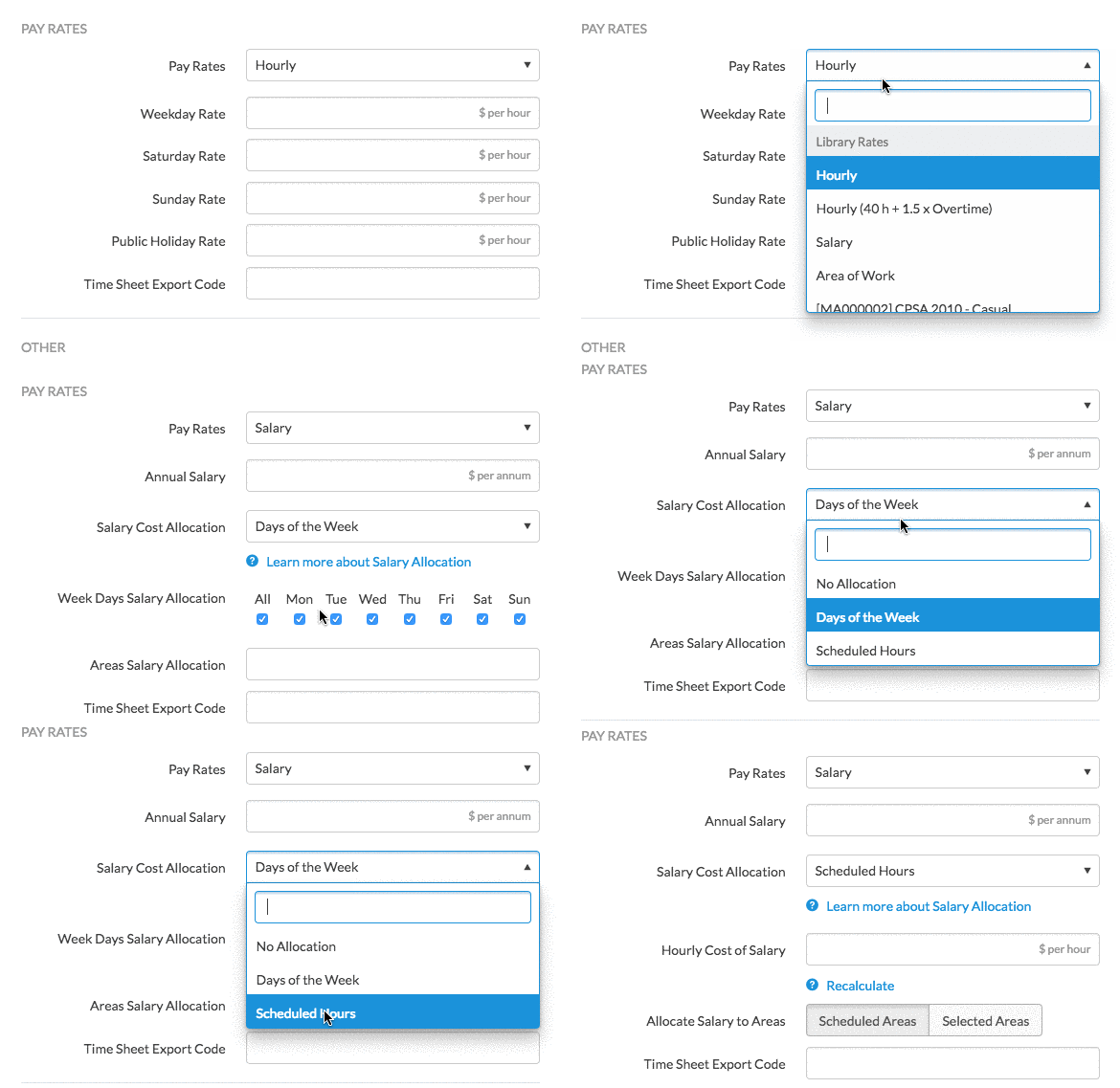
Budgeting for labour is easier when you can see exactly where each cost lands. Deputy gives you three ways to allocate salaried staff costs to the right cost centre, so your reporting reflects how your business really runs. Let's walk through each one.
Allocate salary costs across fixed days of the week
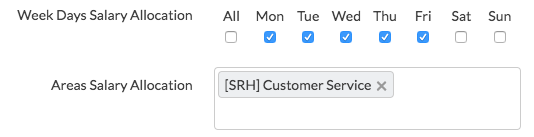
With this option, you allocate salaried staff costs to a cost centre for fixed days of the week. It works best when your staff tend to work the same days week to week.
For example, Hannah leads a customer service team and works a 40-hour week, Monday to Friday. By choosing days-of-the-week allocation, her wage costs are portioned equally across those five days.
When you enter sales revenue in Deputy, you can then review labour efficiency using the wages-to-sales ratio.

Split salary costs across scheduled areas
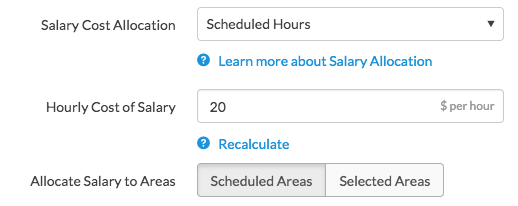
The Scheduled Hours to Scheduled Areas option spreads salary costs according to where you place your staff on the rota. It suits team members who work across several areas of your business. For it to work well, you'll need to place your staff in the right areas.
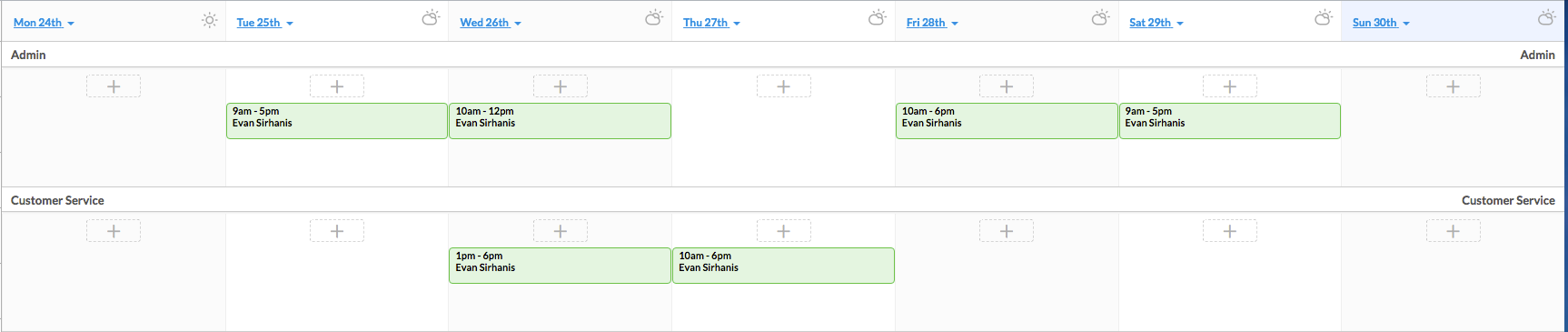
In this example, Evan is scheduled with the admin team for 24.5 hours and the customer service team for 13.5 hours. With this option enabled, his salary cost is allocated across both cost centres, at 24.5/38 and 13.5/38 respectively. That gives you a truer labour cost per cost centre, so you can review performance with more confidence.
Assign salary costs to a specific cost centre
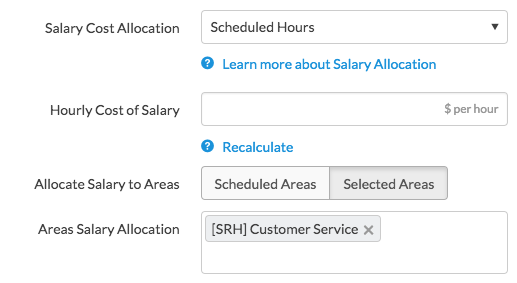
The Scheduled Hours to Selected Areas option is best when your staff work in several areas but you need their cost assigned to one place. With it enabled, wage costs are apportioned by scheduled hours and allocated to the cost centre you specify.
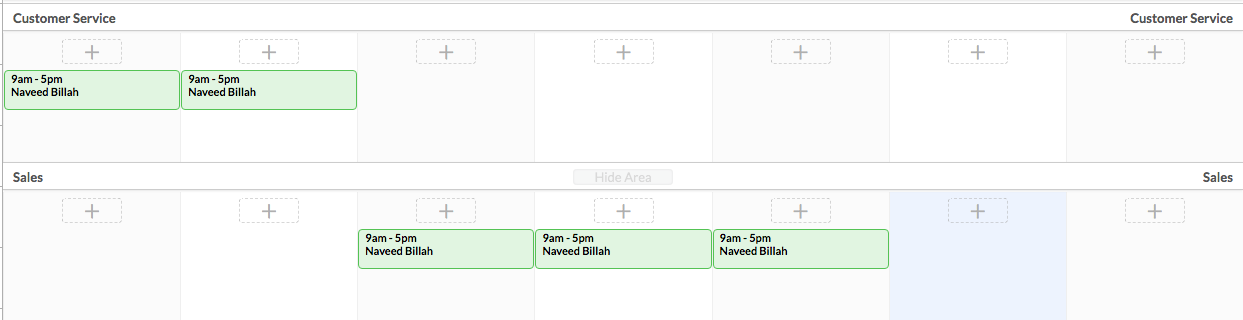
For example, Naveed usually works in customer service but spends this week closing deals himself. Wherever he works, his salary cost stays with the customer service cost centre, helping provide a more accurate view of labour costs.