Every shift, in every workplace, managers are coaching. They notice the new starter who calmed an angry customer. They notice the closer who keeps cutting corners. They have a quiet word, make a mental note, and move on to the next thing the floor throws at them. And then it's gone.
That feedback lives in a conversation, a text message, a notebook behind the till, or one manager's memory. It works until the moment it matters. Review time arrives and there's nothing to point at. Someone gets let go and there's no record of the three conversations that led there. A good manager moves on and takes a year of context about the team with them.
Nobody set out to run performance this way. The tools built to fix it were built for a different kind of work — salaried people at desks, annual cycles, self-assessments, 360s. Ask a manager to open one of those between shifts and it simply doesn't happen.
Performance, captured where it happens
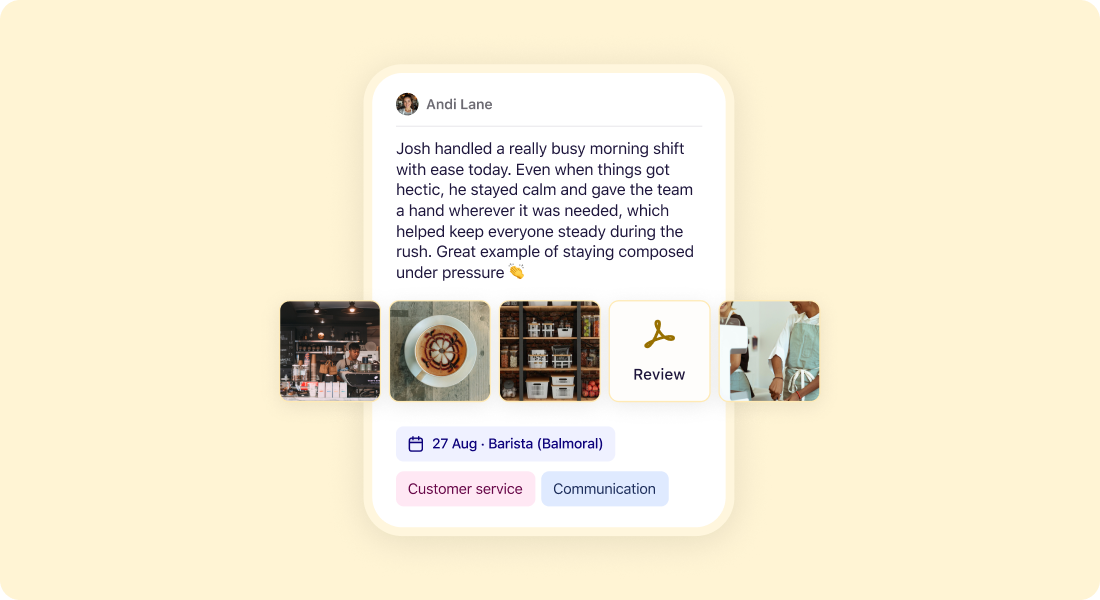
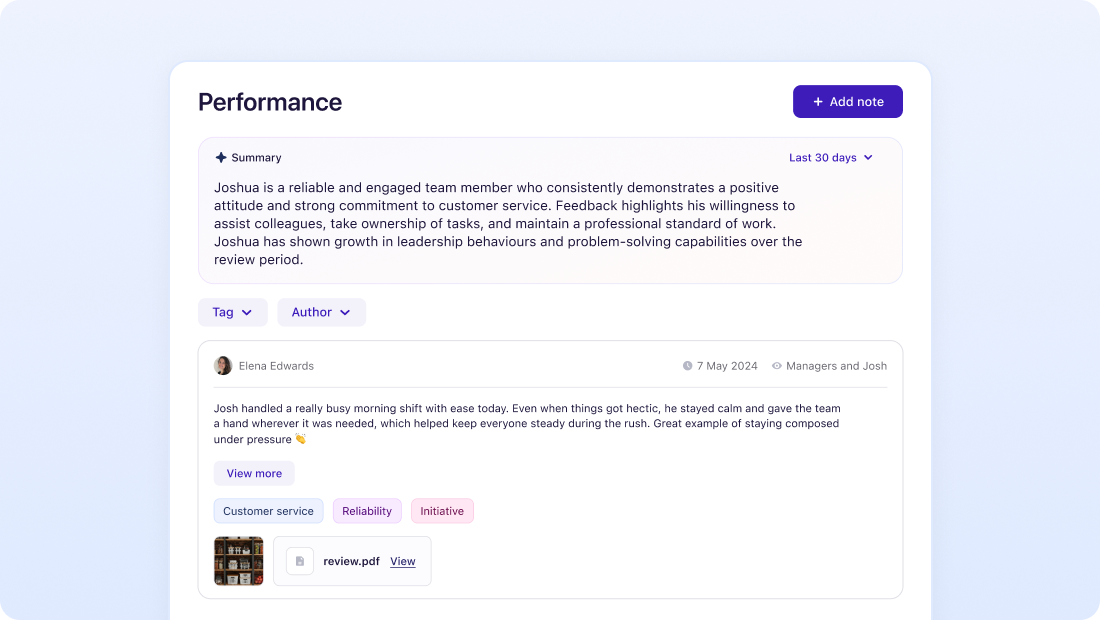
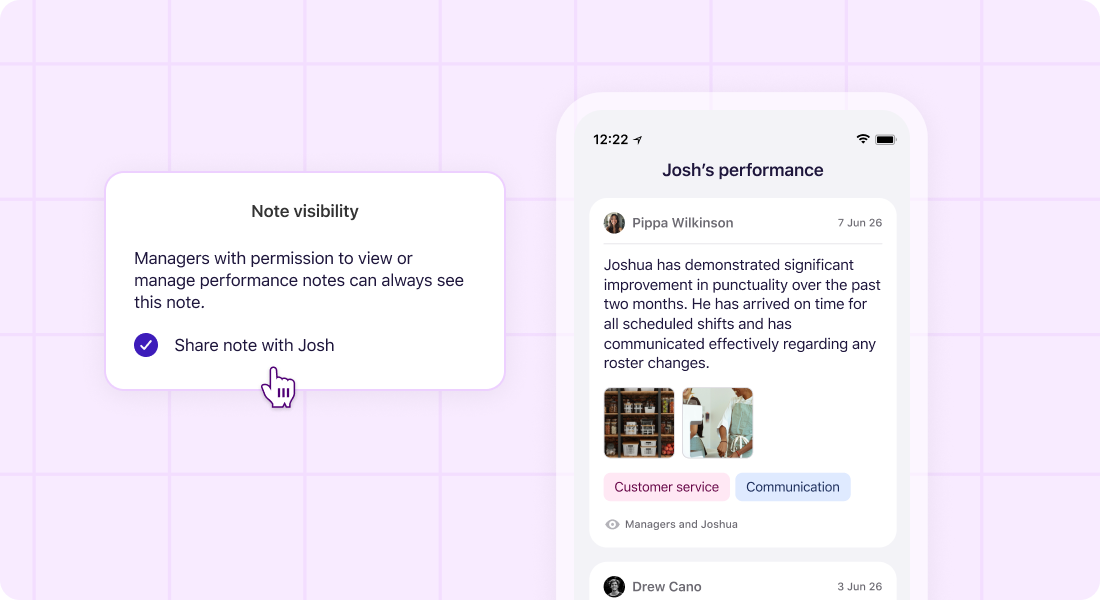
Shift Performance is the performance record built for shift work. Managers write, tag, attach files to and share performance notes on mobile or desktop, for the same people they already schedule in Deputy, and link each note to the shift it happened on.
Write it down before it's gone
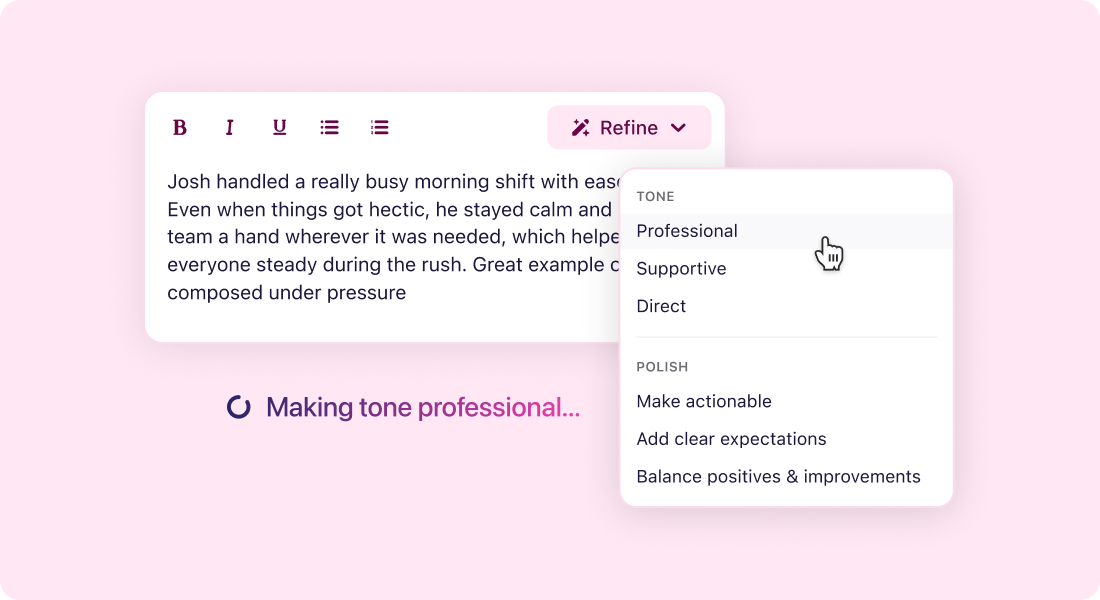
Your managers notice things all shift and forget most of them by the next one. Deputy HR lets them write it down from their phone, on the floor, in the app they already have open. Notes sit on the employee profiles you already run in Deputy, so there's no double entry and no separate system to keep in sync. And if the words are hard to find, AI turns a rough thought into clear, professional wording — so the difficult note gets written instead of avoided.