Your Quick Guide to the July 1 Minimum Wage Shift
Running a business means spinning many plates at once, from managing your team and taking care of customers to balancing the books just to keep things moving. But keeping up with shifting local labor laws shouldn’t have to take up your time.
On July 1st, a scheduled wave of mid-year minimum wage updates is going live across the U.S. If you didn’t know about these upcoming changes or just need an easy place to find exactly what rates apply to your area, keep on reading.
To save you the time of digging through multiple country and city municipal sites, we’ve compiled a comprehensive list of state, regional, and city changes in the chart below. As you review the breakdown, you’ll notice it isn’t just about statewide increases.
The real complexity lies in the specialized rules, including California's healthcare-specific rates, hotel worker ordinances in major cities, and minimum wage requirements that vary based on employer size or geographic location. Missing one of these updates could increase the risk of payroll errors and potential compliance issues.
Updated minimum wage rate changes (effective July 1, 2026)
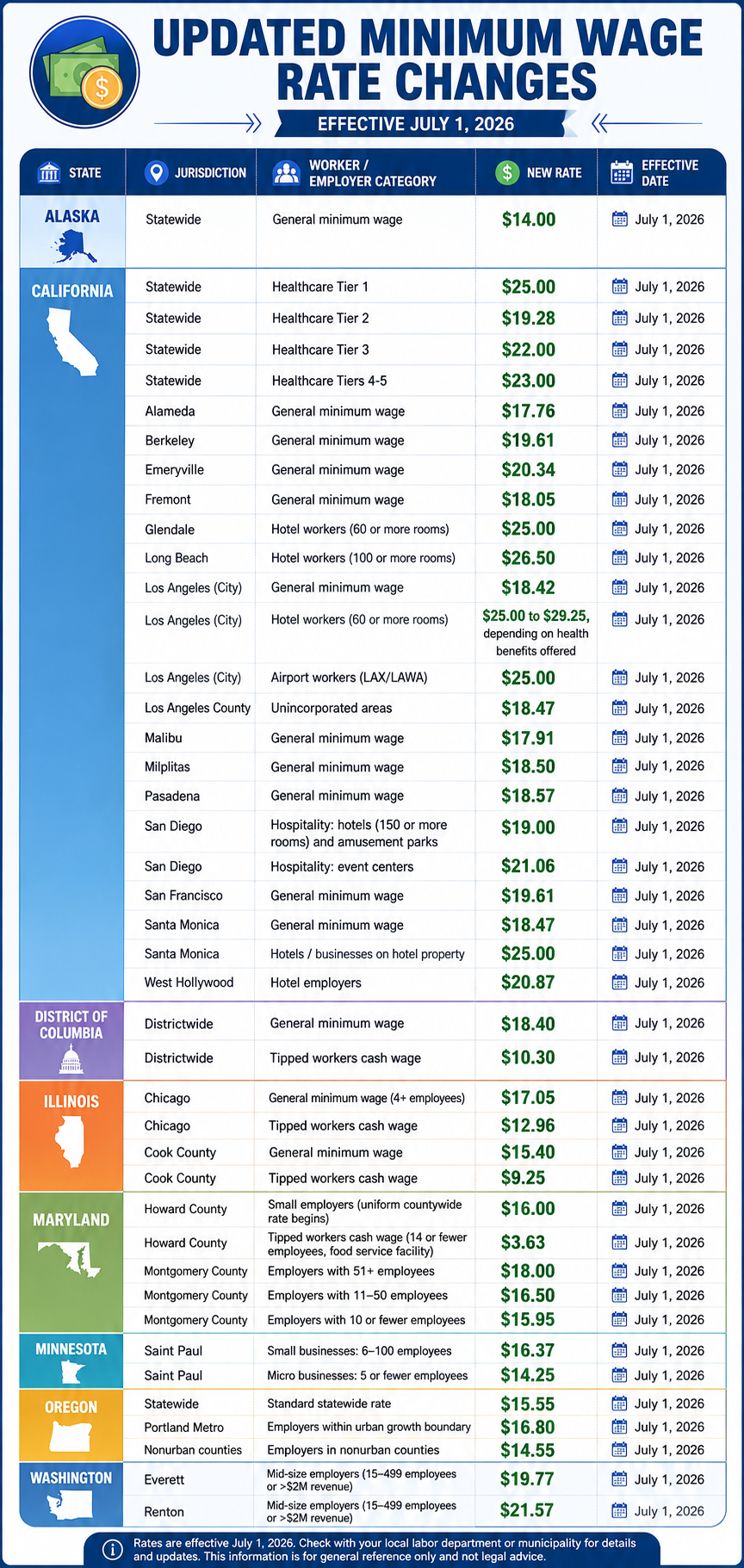
Reviewing the data is only the first step. The real work comes down to updating your operational workflows while keeping your business running smoothly. Manually updating pay rates across schedules and ensuring your labor costs flow accurately into payroll can quickly become a time-consuming administrative task.
This is where having a connected system can help. When local minimum wage rates change, keeping scheduling and payroll aligned can become a significant administrative task. With Deputy Payroll enabled by Paycor, your workforce management and payroll work together in one place.
Built-in U.S. pay rates flow from approved shifts into payroll, while the system surfaces potential issues for manager review throughout the process, helping reduce manual errors between scheduling and payroll. Once you approve your timesheets in Deputy, you can send them directly to payroll in a single click, helping eliminate manual data re-entry and simplifying your payroll workflow.
For the latest on labor trends, operational tips, and compliance news, stay tuned right here with our new Hub: The Frontline Feed.
Disclaimer: This article is provided for general informational purposes only and is not legal or payroll advice. Deputy is designed to support compliance workflows and help streamline workforce management, but customers remain responsible for configuring the platform appropriately and complying with applicable employment laws and regulations.
See how Deputy can help you reduce costs